Harbor Freight’s Predator generator lineup has grown into one of the most complete and competitively priced portable power ranges on the market. With the 2026 expansion adding four new models, Predator now covers everything from a 2,500-watt camping companion to an 11,500-watt tri-fuel beast capable of running an entire home. This guide breaks down every current model, explains what makes Predator generators tick, and helps you choose the right one for your situation.

What Is a Predator Generator?
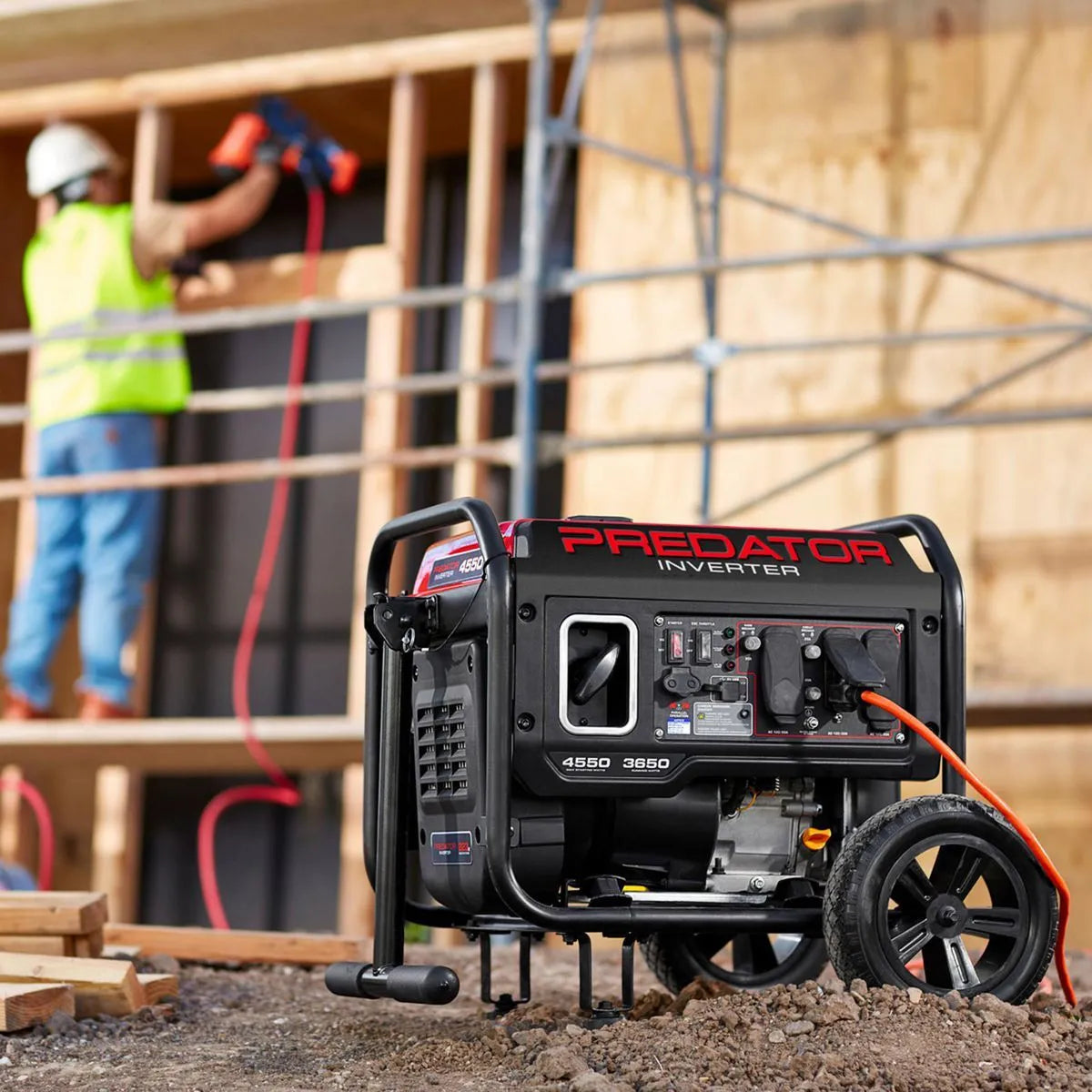
Predator is the in-house generator brand of Harbor Freight Tools, sold exclusively through Harbor Freight stores and their website. The brand covers portable inverter generators, conventional open-frame generators, multi-fuel models, power stations, engines, and pumps. Harbor Freight designs the Predator line and contracts production to Chinese OEM partners, with teardowns pointing to Loncin and Lifan as likely engine and assembly suppliers.
What Predator brings to the table is a clear value proposition: pro-grade specs (PID-style inverter technology, CO shut-off sensors, parallel capability, electric start) at roughly half the price of name brands like Honda or Yamaha. Real-world owner reports consistently show the gap in raw performance is much smaller than the gap in price.
The Complete 2026 Predator Generator Lineup
The current Predator generator catalog falls into three main categories: super-quiet inverter generators, traditional open-frame gas generators, and multi-fuel models. Here’s how each one stacks up.
Super Quiet Inverter Generators
Inverter generators produce clean, stable «pure sine wave» power that’s safe for sensitive electronics — phones, laptops, TVs, CPAP machines, RV air conditioners. They’re also quieter and more fuel-efficient than conventional generators because the engine speeds up and slows down based on actual load.
Predator 2500 Super Quiet Inverter
- Starting watts: 2,500
- Engine: 98cc Predator
- Noise level: 58 dBA at 25% load
- Runtime: up to 10.2 hours at 25% load
- Standout feature: 30W USB-C outlet for fast mobile charging
- Best for: camping, tailgating, light backup
Announced in 2025 and now firmly part of the lineup, the 2500 is the lightest, quietest Predator. At 58 dBA it’s roughly as loud as a normal conversation, and the Electronic Speed Control mode keeps fuel consumption low when you’re powering small loads.
Predator 3500 Super Quiet Inverter
- Starting watts: 3,500 / Running: 3,000
- Engine: 212cc Predator
- Noise level: 56 dBA at 25% load
- Fuel tank: 2.3 gallons
- Runtime: over 11 hours at 25% load
- Features: electric start, parallel capable, RV adapter included, GFCI outlets
- Best for: RV camping, 30-amp RV power, midsize backup
The 3500 is the workhorse of the inverter range and arguably the most popular Predator generator overall. With a 30-amp twist-lock outlet and an RV adapter in the box, it’s the default choice for travel trailers and small camper rigs. The pure sine wave output runs everything from a 13,500 BTU RV air conditioner to laptops without complaint.
Predator 5000 Super Quiet Inverter (Dual Fuel)
- Starting watts: 5,000 / Running: 3,900
- Fuel: gasoline + propane (dual fuel)
- Runtime: up to 18.2 hours at 25% load on gas
- Best for: medium home backup with fuel flexibility
The 5000 Inverter sits between the 3500 and the new tri-fuel flagship. Dual-fuel capability means you can keep propane on hand for long-term storage (gasoline degrades; propane doesn’t), giving it an edge for emergency preparedness.
Predator 11,500 Tri-Fuel Super Quiet Inverter with Remote Start
- Starting watts: 11,500
- Fuel: gasoline + propane + natural gas (tri-fuel)
- Runtime: up to 14 hours depending on fuel
- Outlets: 50A outlet for whole-house transfer switch
- Features: remote start, Electronic Speed Control, pure sine wave
- Price: $2,199.99
- Best for: whole-house backup with maximum fuel flexibility
This is the new flagship in the Predator lineup. The ability to run on natural gas means you can plug it directly into a home gas line during extended outages — no fuel storage needed. The 50A outlet pairs with a transfer switch for proper whole-house backup.
Traditional Open-Frame Gas Generators
These conventional generators trade the quieter operation and clean power of inverters for raw output and lower price per watt. Great for job sites, well pumps, and high-draw appliances.
Predator 5000 Gas-Powered Portable
- Starting watts: 5,000 / Running: 4,000
- Engine: 224cc
- Runtime: 15.2 hours
- Noise level: 71.3 dBA
- Best for: job sites, light home backup on a budget
Predator 10,000 Gas-Powered Portable with Remote Start
- Starting watts: 10,000 / Running: 8,000
- Fuel tank: 10 gallons
- Features: remote start, digital display for volts/frequency/runtime
- Best for: heavy home backup, contractor sites
The 10,000-watt model is the new high-output traditional generator in the range. With 8,000 running watts and a 10-gallon tank, it can run essential home circuits (fridge, freezer, well pump, furnace blower, lights, microwave) for many hours between fill-ups.
Legacy Open-Frame Models Still Worth Mentioning
Earlier Predator open-frame generators like the 9500 (9,500 starting / 7,500 running watts) remain widely owned and available secondhand. They’re rugged, cheap to run, and easy to repair — though they lack inverter-grade clean power and run noticeably louder than the new inverters.
Features That Come Standard on the 2026 Lineup
All four of the 2026 generators share a core feature set worth understanding before you compare against other brands:
- CO SECURE Technology. A built-in carbon monoxide sensor that automatically shuts the generator off if dangerous CO levels are detected. This is now an ANSI/PGMA standard, but Predator was an early adopter across the line.
- 49-state and California compliant versions. Both compliance versions are sold at the same price with no feature difference.
- ANSI/PGMA G300-2018 compliance. Meets the modern North American portable generator safety standard.
- Pure sine wave output on all inverter models — safe for sensitive electronics.
- Electronic Speed Control (ESC) Mode. Throttles the engine based on actual load, extending runtime and reducing noise.
How to Choose the Right Predator Generator
The right model depends almost entirely on how and where you plan to use it. Walk through these questions in order:
1. What do you actually need to power?
Add up the running watts of what you want to run simultaneously, then add the highest single starting wattage on top. Quick reference:
- Phones, laptops, lights, fan, small TV (≤1,500W): Predator 2500
- RV with 13,500 BTU A/C, fridge, microwave at separate times (≤3,000W running): Predator 3500
- Essential home circuits — fridge, furnace blower, lights, sump pump (≤3,900W running): Predator 5000 Inverter
- Most of the house including central A/C (≤8,000W running): Predator 10,000 or 11,500 Tri-Fuel
2. Inverter or conventional?
If you’ll be running anything with sensitive electronics — laptops, TVs, modern fridges, CPAP machines — choose an inverter (2500, 3500, 5000 Inverter, 11,500 Tri-Fuel). For a worksite or pure resistive loads, the cheaper conventional 5000 or 10,000 models are fine and give you more watts per dollar.
3. How important is fuel flexibility?
For occasional use, plain gasoline is fine. For long-term emergency preparedness, dual fuel (gas + propane) or tri-fuel (gas + propane + natural gas) is a major upgrade — propane stores indefinitely, and natural gas lets the generator run continuously from a home gas line during multi-day outages.
4. How quiet does it need to be?
For campsites, RV parks, and neighborhoods with close neighbors, stick to a Super Quiet inverter (56–58 dBA range). Open-frame generators run 70+ dBA — fine for a worksite, less fine at 2 AM in a campground.
5. Portability vs. capacity tradeoff
The 2500 weighs under 50 lbs and has a single carry handle. The 11,500 Tri-Fuel is a 200+ lb wheeled unit. Decide whether you’ll be lifting it into a truck bed or rolling it across a driveway, and size accordingly.
Predator vs. Honda, Champion, and Generac
The most common comparison shoppers ask about is Predator versus the established brands:
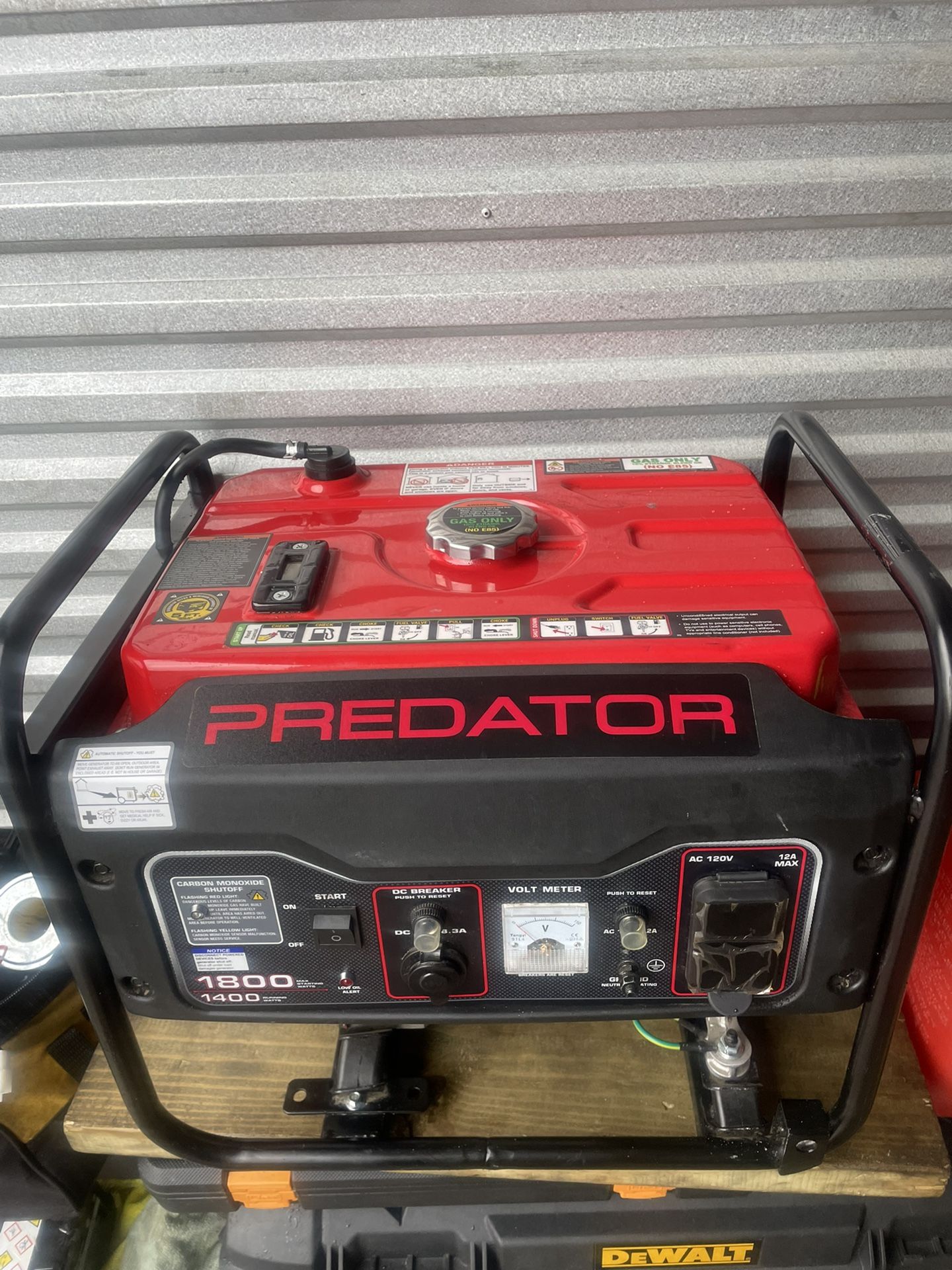
- Vs. Honda: Honda EU-series inverters are the gold standard for noise and longevity, but cost roughly 2x the equivalent Predator. For occasional and even regular use, Predator delivers 80–90% of the experience at half the price.
- Vs. Champion: Closer fight. Champion has slightly better customer service and a wider dealer network; Predator usually edges Champion on raw features per dollar.
- Vs. Generac: Generac dominates whole-house standby, but for portable use Predator’s tri-fuel 11,500 directly challenges the Generac GP series on price.
Bottom line: Predator generators are the right choice if you value features per dollar, accept that long-term warranty support is limited to Harbor Freight, and don’t need the brand-name resale value of a Honda.
Real-World Pros and Cons
What Predator gets right
- Strong feature-to-price ratio across every category
- CO shut-off sensors standard across the line
- Wide model range — there’s a Predator for almost every use case
- Pure sine wave inverter technology on all inverter models
- Easy parts and service through Harbor Freight stores
- 2026 lineup adds remote start and tri-fuel options that previously meant paying double
What to watch out for
- Manufacturing variance is wider than premium brands — buy and break in promptly to catch any defects during the return window
- Customer service is Harbor Freight, not a dedicated generator brand
- Owner’s manuals are good but not as detailed as Honda’s
- Resale value lower than Honda or Yamaha
- Long break-in period recommended (5–10 hours) before applying full load
Maintenance Tips for Any Predator Generator
- Break it in. Run no-load and light-load for the first 5–10 hours, then change the oil. This single step has the biggest impact on long-term reliability.
- Use fuel stabilizer. If you’ll go more than 30 days between uses, add stabilizer to every tank or run the carburetor dry before storage.
- Change oil on schedule. First change at 5 hours, then every 50 hours of runtime or once a year — whichever comes first.
- Keep the air filter clean. Inspect every 25 hours; replace at the first sign of significant dust load.
- Exercise it monthly. Even if you’re not using the generator, start it once a month and run it for 15–20 minutes under light load.
- Never refuel a hot engine. Let it cool for at least 5 minutes before opening the gas cap.
- Use synthetic oil for cold-weather operation. Standard 10W-30 is fine in mild temps; switch to 5W-30 synthetic below freezing.
Predator Generator FAQ
Who makes Predator generators?
Predator is Harbor Freight’s exclusive house brand. The generators are designed by Harbor Freight and manufactured by Chinese OEM partners — Loncin and Lifan are commonly cited as the actual builders, though Harbor Freight doesn’t officially disclose its suppliers.
Are Predator generators reliable?
Generally, yes — especially the inverter models with the 212cc Predator engine, which is widely respected for durability. Like any budget brand, manufacturing consistency varies, so buy from a Harbor Freight you can return to, and break the generator in carefully.
Can I run a Predator generator in the rain?
Not directly. Use a generator tent or pop-up canopy that allows ventilation but keeps water off the unit. Never run a generator inside any enclosed space — including garages, sheds, and basements — because of carbon monoxide risk.
Can two Predator inverters be paralleled for more power?
Yes — the 3500 and the new inverter models support parallel operation via an accessory cable, effectively doubling available wattage. Useful when you want to upgrade capacity without replacing your existing generator.
What’s the warranty on a Predator generator?
Harbor Freight offers a limited warranty that varies by model. Always check the warranty card and current Harbor Freight policy at time of purchase, and consider their extended protection plan for higher-end units like the 11,500 Tri-Fuel.
Are Predator generators safe for sensitive electronics?
The inverter models are. They produce pure sine wave power with low total harmonic distortion (under 3% in most cases), which is safe for laptops, phones, TVs, and medical devices. The conventional open-frame 5000 and 10,000 produce dirtier power and aren’t recommended for sensitive electronics.
Final Take
The 2026 Predator generator lineup is the most complete and capable it has ever been. Between the camping-friendly 2500, the RV-staple 3500, the dual-fuel 5000, the new tri-fuel 11,500, and the workhorse 5000 and 10,000 traditional models, there’s a Predator for essentially every use case. If you want premium-brand polish and resale value, look at Honda. If you want the most generator for your money, with modern safety features and a clear upgrade path through dual and tri-fuel options, Predator deserves a hard look. Match the model to your real-world load and use case using the guide above, and you’ll end up with a generator that quietly does its job for years.